
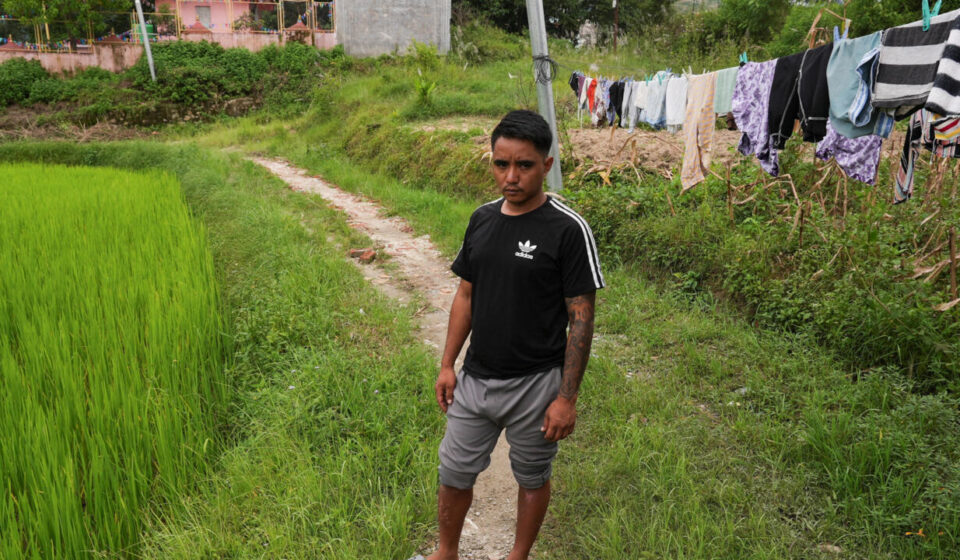

Dhan Bahadur Tamang was at work in a hydropower project near Nepal‘s border with China when he sensed a sudden air pressure change in the underground tunnel at the Upper Trishuli 1 Hydropower Project.
Under the industrial floodlights, dust started to rise, the 32-year-old recalled: «Something was coming.»
Nobody in the tunnel was prepared for what was about to hit them: a flood wave that had by then already flattened entire settlements upstream on the Trishuli river and was rolling down the valley with immense destructive power that killed more than 1,252 people in Nepal.
Tamang, who had been hired by the project as a support worker, said hundreds may have been on site when the disaster struck last week.
«Suddenly, people started running, shouting, and scrambling,» Tamang said. «By the time I could have realised anything, I was over a top of a tanker (truck).»
«Once I was up, the vehicle began moving,» he said. Water began rushing into his section of the tunnel. «I felt again and again that I was going to die.»
Nepal: How are the hundreds of victims from the floods being identified?
One of your browser extensions seems to be blocking the video player from loading. To watch this content, you may need to disable it on this site.

Nepal’s disaster authority on Thursday reported a sharp increase in the number of missing. At least 1,259 people were killed in the tragedy, said officials, while the number of missing rose to 5,083.
On the China side of the border, Chinese state media reported 21 people killed in Tibet and 541 missing, taking the total toll from the August 26 disaster to 1,280 dead and 5,624 missing.
The missing includes more than 800 foreigners from at least 34 countries, including tourists and pilgrims, in both Nepal and China.
Why were so many Indian pilgrims in Tibet during the Himalayan mudslide disaster?
One of your browser extensions seems to be blocking the video player from loading. To watch this content, you may need to disable it on this site.

More than 9,300 Nepalese army troops were on the ground in the affected areas of Timure in Rasuwa, Nuwakot, Dhading, Chitwan and Nawalparasi East, coordinating the search and rescue mission, said an army statement.
Rescue efforts have focused increasingly on tunnels at six hydroelectric plants where around 900 workers are trapped, according to Nepali authorities.
One of your browser extensions seems to be blocking the video player from loading. To watch this content, you may need to disable it on this site.

Clinging on to pipes
Tamang was among the lucky ones who escaped. From the top of the truck in the tunnel, he tried to hold on to anything he could grab, climbing on pipes and trying to keep his head above the raging water. He suffered injuries to one of his legs.
«My mind kept going to my family. I thought about home, about my mother and father, about the people I might never see again. I shouted, I cried,» he said.
When the velocity of flood water receded, Tamang was still alive. So were others, he noticed with relief.
They tried to make their way back to the entrance of the tunnel, but found the route blocked by debris. The only other option was to head deeper into the tunnel system.
«As we moved, we started seeing bodies,» he said. Some people were injured and unable to move.
«There were bodies all around. We were trying to get out and save our lives. Some were crushed so badly that there was no help possible. They were dead bodies,» he said.
Read moreTibetan activists accuse China of underreporting flood death toll
Not going back to work inside tunnels again
By that point the tunnel was in near-complete darkness, so Tamang and the others held hands so as to not lose each other as they picked their way through the debris, guided by a single flashlight.
«It was a long, exhausting fight through darkness, water, wreckage, and bodies,» he said.
Then, he recalled, there was a burst of light. «When we finally came out, the outside brightness felt unreal.»
The shaking group of survivors was soon surrounded by other people, who supplied dry clothes. But Tamang said rescue operations proceeded only slowly, as fog stalled helicopter operations.
Determined to return to his family, Tamang made his way with the help of villagers but was later transferred to a hotel and then to a hospital for a medical checkup.
«When I finally met my wife, she cried,» said Tamang, who has had nightmares since his return, with his mind going back to scenes from the tunnel and memories of dead former colleagues.
«I will not work inside hydropower tunnels again,» he said. «I do not want to test fate.»
(FRANCE 24 with Reuters and AFP)
Fuente:
Leer la noticia original