
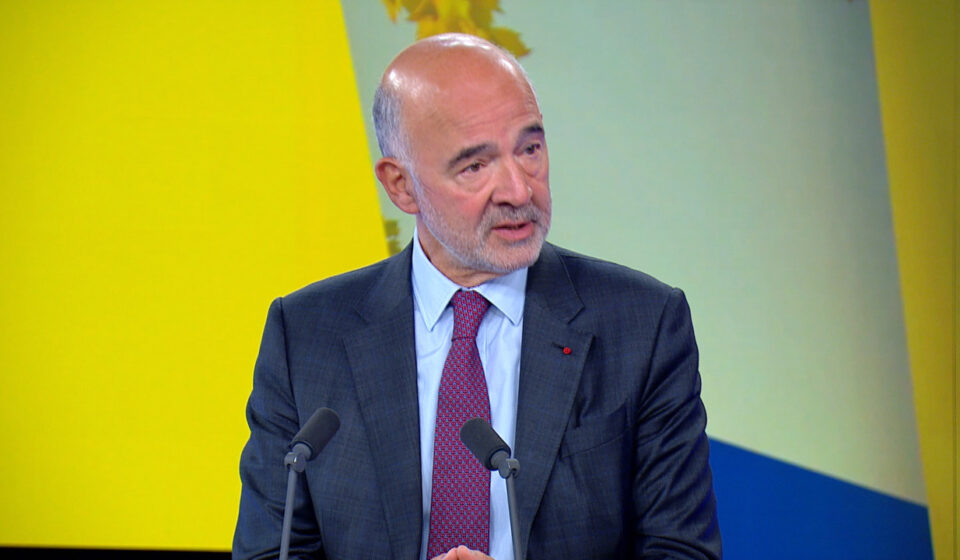
EU’s Covid recovery fund was ‘absolutely a success’: European Court of Auditors’ Pierre Moscovici – Talking Europe


2020 was an annus horribilis. Covid stalked the land. Lockdowns, curfews and social distancing were the order of the day. But there was a silver lining: European countries showed themselves to be capable of great solidarity, jointly procuring vaccines and then agreeing on a mammoth post-Covid recovery fund, the Recovery and Resilience Facility (RRF). That fund has disbursed €450 billion in grants and loans to EU member states since 2021. As the RRF enters its crucial final phase, we take stock of the situation with Pierre Moscovici, the French member of the European Court of Auditors (ECA).
The ECA has just presented a report on the health of the EU’s finances, which also talks about the implementation of the RRF.
Moscovici says that the creation of the Covid recovery plan «was a crucial decision. Some people, and I was one of them, had been arguing for Eurobonds, for common borrowing, in order to invest together in Europe. And this was never possible due to some political positions between member states and the EU Commission. And finally, because of Covid, this was done. This was called Next Generation EU. It was the idea that we could borrow together some €750 billion in order to sustain growth, to be capable of facing the consequences of Covid. And this was absolutely a success. Some countries, for example Spain or Italy, massively benefited from this fund and were able to recover swiftly.»
Moscovici elaborates: «The question is, is this a one-off, or should we do that again? Should it become permanent? Should it also inspire the Multiannual Financial Framework (the EU’s long-term budget) that the member states and the Council are now preparing? Because if we want to do that again – that’s what Mario Draghi (the author of a seminal report on EU competitiveness) is proposing that we do massively. He believes that we need to have €1.2 trillion worth of investments in defence, in greening the economy, in order to face the future. But to do that, we also have to know what has been working in the RRF and what has not been working.»
Moscovici sums up: «The Recovery and Resilience Facility now also has to be evaluated not only on what has been disbursed, but also on the results. And that’s what the European Court of Auditors is wondering or examining or evaluating with facts and findings. So our main concern and our motto is ‘let’s go to results’.»
Moving onto broader economic issues, Moscovici highlights the problem of debt, both at the EU and at the national level.
«There two different things,» he explains. «The one thousand billion euros of debt (that is projected to be reached in 2027) refers to the European Union. And then there is the problem of national countries. In France we have a debt-to-GDP ratio of 120 percent. That means that the servicing of debt is over €90 billion a year. The consequences of that are clear. When you have so much to reimburse, you cannot finance pensions, health, research and innovation, or schools. We are now in a in a crisis with education. We are in a crisis with the price of energy. That’s the consequence when a country is indebted. The EU is not in the same situation. It still has a triple A (rating). But what the European Court of Auditors has flagged is that the EU has a debt as well. It is significant. The repayments will last for decades. And we must take care of that debt.»
Programme prepared by Agnès Le Cossec, Perrine Desplats, Oihana Almandoz and Isabelle Romero
Fuente:
Leer la noticia original