


Almost four years into the artificial intelligence boom, the world’s biggest tech companies are still making grand promises about the future. The problem is, they’re burning through their cash in the process.
AI spending among the megacaps is projected to reach $765 billion this year, before rising to nearly $1.2 trillion in 2027, according to Goldman Sachs. Amazon boosted its capital spending forecast for the year on Thursday to $220 billion, the highest among the four hyperscalers.
Amazon also reported negative free cash flow for the trailing 12 months of $7.6 billion, a day after Meta disclosed a 91% drop in cash generation from a year earlier. Last week, Alphabet said cash flow turned negative for the first time on record, a stunning development for one of the most profitable companies on the planet.
Alphabet finance chief Anat Ashkenazi told analysts on the earnings call that free cash flow will remain under pressure as the company seizes on the «AI opportunity.»
With tech earnings season largely wrapping up this week — Nvidia is set to report on Aug. 26 — it’s become readily apparent that AI investments are distorting balance sheets, even as industry leaders continue to tout the future benefits of their mammoth bets on new data centers, and the chips and systems that populate them.
One big reason that costs are rising more than previously expected is the memory crunch, caused by insatiable demand for AI processors that rely on memory supplied by a small set of vendors.
Tesla CEO Elon Musk described memory pricing as «insane» on the automaker’s earnings call last week, and Amazon CEO Andy Jassy said the «inflated price» of memory chips drove his company’s capex guidance higher.
Apple, which is spending far less than its Big Tech peers, is particularly susceptible to the memory crisis because the technology is a key piece of every consumer device. Apple has already raised prices on Macs and iPads, and many analysts expect iPhone price hikes later this year.

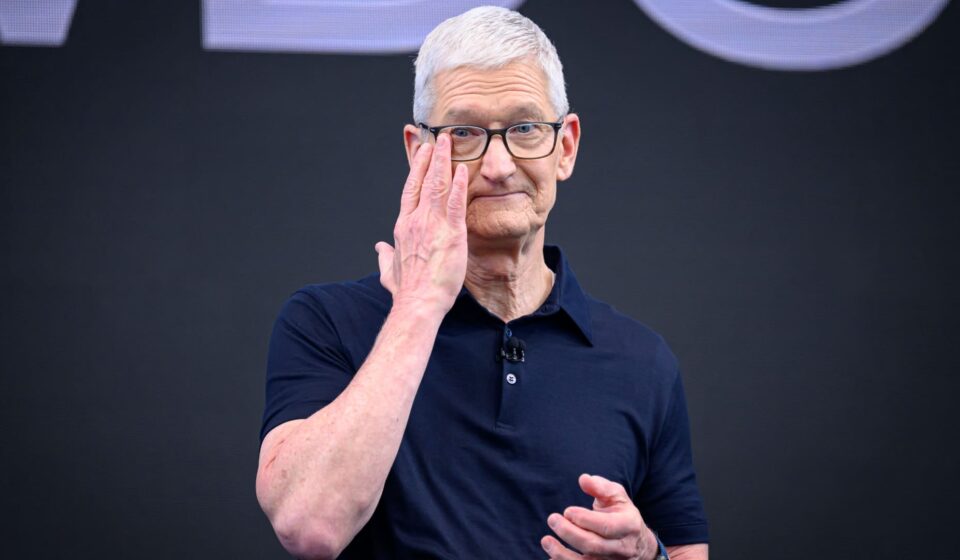
On Thursday, the company issued a weaker-than-expected forecast due to what CEO Tim Cook called «supply constraints.» It’s not a problem he expects to ease up this year.
«If you look beyond September, we see the market pricing for memory continuing to increase, which could drive an increasing impact on our business,» Cook, who’s stepping down as CEO on Sept. 1, said on the earnings call. «And we’re continuing to evaluate this.»
For Apple, memory is a revenue problem, as the company prepares for weaker consumer demand due to higher prices. But for the hyperscalers, it’s becoming a huge cost hurdle as prices soar for the memory-hungry AI systems that they all buy from Nvidia.
Musk went so far as to thank memory vendor Micron for giving the company «a very significant allocation on reasonable terms.»
Mixed reactions
Investor reactions to the reports varied dramatically.
Tesla and Alphabet both sank last week as they turned cash flow negative and pointed to accelerated spending. Meta plummeted following its report on Wednesday due to a weak forecast and continued uncertainty surrounding its AI monetization strategy. Microsoft, meanwhile, had its best day on the market since 2008 as it coupled better-than-expected results with increased capex guidance.
«MSFT has room to meaningfully re-rate,» Wells Fargo analysts, who recommend buying the shares, wrote in a note to clients. The rally cut Microsoft’s stock drop for the year to about 7%.
Apple shares slid following its Q3 print as the memory shortage weighed on its outlook, while Amazon’s surging cloud growth was a major catalyst for the online retailer’s stock pop.
«Not only is the revenue growth dramatic, but the profitability is rising,» Mark Mahaney, an analyst at Evercore ISI, told CNBC’s «Closing Bell: Overtime» after the report. Mahaney said the growth rate for Amazon Web Services had been lagging Microsoft Azure and Google’s cloud business, and that «this is just the breakout that the stock needed.»
Wedbush analysts said in a Friday note that Amazon’s report was the «cleanest beat» among the hyperscalers it covers, while management offered the clearest explanation of how it will achieve returns on its capex spend.
«This clean beat and walk through are the factors in our view on the different share reaction between GOOGL and AMZN on what we view as similarly strong fundamental prints with raises in capex,» the analysts wrote.
But across the megacap landscape, none of the stocks — unless you include Micron — are having breakout years, despite healthy revenue growth. The muted market moves reflect growing skepticism over whether the massive AI buildout, fueled increasingly by debt, will ultimately pay off.
Then there’s the China conundrum.
In recent months, a slew of Chinese AI labs have released new and updated AI models that are narrowing the performance lead held by OpenAI and Anthropic at much lower prices, playing into a popular trend as corporate America gets more frugal when it comes to spending on AI services.
The so-called open-weight models can be downloaded, tweaked and hosted on whatever infrastructure the user chooses.
With so much of the AI market built around OpenAI and Anthropic, which are both valued at close to $1 trillion on the private market, any potential threat to their business presents risks to the AI trade as a whole.
In a report last week, Dana Harlap, investment strategist at JPMorgan Chase, asked the rhetorical question, «Is it all one big AI trade?» Harlap said the reaction to Google’s report shows that Wall Street is scrutinizing spending.
That’s true even when companies beat revenue estimates, which Google did while reporting 82% cloud growth.
«We’re seeing the market become more critical — and more discriminating — across hyperscalers as investors try to separate AI winners from losers,» Harlap wrote. «Long-term, the success (or failure) of the hyperscalers to generate an acceptable return on investment on their heavy capex investments will likely be correlated with the returns of the AI ecosystem.»
WATCH: Apple warns its strongest product cycle is outrunning supply

Fuente:
Leer la noticia original