
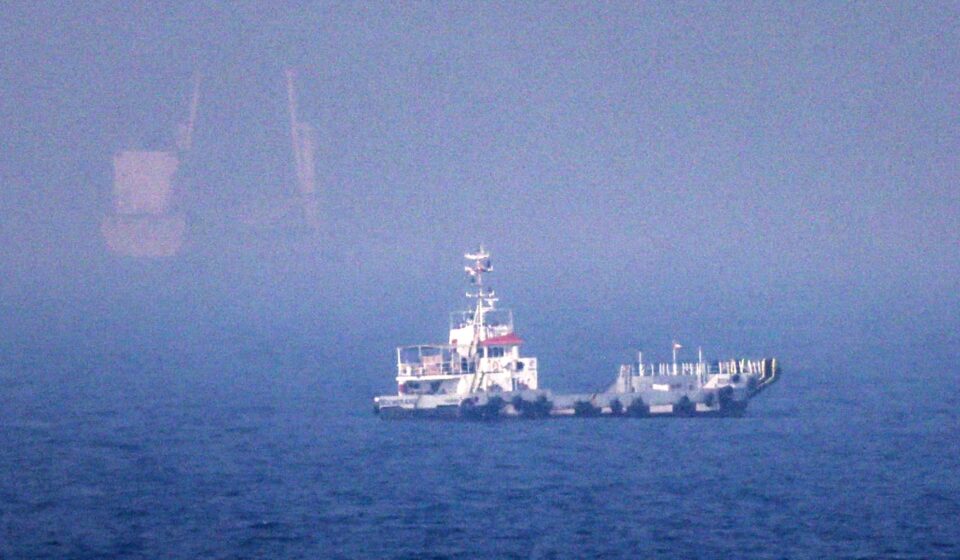

TOPSHOT – This picture shows ships sailing near the Strait of Hormuz off the eastern coast of the United Arab Emirates at Khor Fakkan on July 13, 2026.
Afp | Getty Images
The U.S. military redirected 20 more commercial vessels away from Iranian ports last week under its naval blockade, signaling no let-up in maritime pressure as a deal to reopen the Strait of Hormuz stayed out of reach.
U.S. Central Command said American forces had redirected 55 commercial vessels as of Sunday, up from 35 as of Aug. 2. American forces have also disabled 2 ships and boarded 2 to endure compliance, according to the statement on Sunday.
The escalating tally underscores how far the two sides remain from resolving a crisis that has choked the Strait of Hormuz for more than five months. The Strait of Hormuz carried about a quarter of the world’s seaborne oil trade and a fifth of global liquefied natural gas before the war erupted in February.
Iranian Foreign Minister Abbas Araghchi said Sunday there was «no possibility of restarting negotiations» as long as the U.S. continues violating the June memorandum of understanding, without compensating for its «violations,» according to Tasnim News Agency, a semi-official news outlet associated with the Islamic Revolutionary Guard Corps.
«Intermediaries are still making efforts to find ways to resume negotiations,» Araghchi said.
U.S. President Donald Trump, who projected confidence that Washington and Tehran could soon strike a deal last week, told Axios that he is prepared to wait for economic distress to mount in Iran, backing away from a renewed military offensive.
«We are low keying it,» Trump said, «We are only semi-negotiating with them. We are just watching Iran with its huge inflation and the fact they have no money.»
The president also posted a chart on Truth Social showing the plunging value of the Iranian rial between 2025 and now, with the title «Iran has no money» and «currency is trash» in text.
Iranian officials have set out sweeping demands to their American counterparts for reopening the Strait of Hormuz, including the U.S. lifting its naval blockade and sanctions, withdrawing American troops from the region, paying war reparations and releasing frozen Iranian assets.
Iran has also been in discussion with Oman to work out an agreement to define transit routes through the strait. The negotiations have progressed well and reached their final stage, Araghchi said, while insisting the deal would not reopen the waterway.
Oman confirmed that its talks with Tehran were progressing in «a positive and constructive atmosphere,» while calling for a halt to repeated attacks on vessels transiting the strait, to create space for diplomacy.
Iranian strikes in Hormuz and Houthi attacks in the Red Sea continued to keep shippers away from both routes. The United Arab Emirates said Saturday that Iran launched a missile on an oil tanker owned by the Abu Dhabi National Oil Company while it was attempting to transit the strait early Saturday.
Yemen’s Iran-backed Houthi militia on Sunday claimed responsibility for an attack on a oil refinery in Saudi Arabia and equipment in Yemen’s Red Sea port city of al-Makha.

Hardening terms
«There doesn’t seem to be much of a compromise, which ultimately makes it more difficult to reach a sustainable deal,» Warren Patterson, head of commodities strategy at ING Bank, said in a note last Friday.
The bank kept its forecast for Brent to average $80 a barrel this quarter, expecting flows to normalize through the third quarter, while flagging substantial «risk and uncertainty» to that baseline view.
Despite progress in recent days, the tone of the rhetoric and deepening distrust between Washington and Tehran leave scope for renewed deterioration, Patterson said. «Things could go from bad to worse once again.»
Shipping traffic through the Strait of Hormuz has dwindled to just eight confirmed crossings last Friday, down 33% from the day before, according to shipping tracker Kpler.
Oil prices took a leg higher on Monday, with international benchmark Brent crude futures jumping nearly 1% to $84.22 a barrel, and U.S. West Texas Intermediate futures gaining 0.6% to $78.63.
Iranian state media published a draft plan last week that would restrict traffic through Hormuz, barring U.S. and Israeli ships from the strait and require compensation from hostile countries before allowing transit. The plan is under review by Iran’s parliament, according to the state outlet Fars.
Tehran would impose penalties on violators equivalent to 20% of the value of cargo aboard a ship, according to the initial draft.
Fuente:
Leer la noticia original