
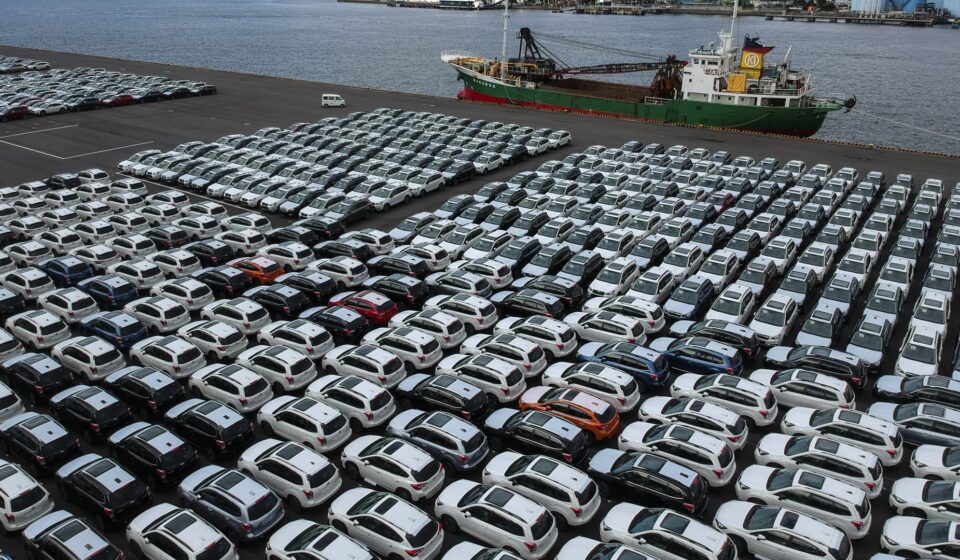

A lot of cars are lined up for importing and exporting cars to the port.
Kokouu | E+ | Getty Images
Japanese automakers are looking vulnerable to fallout from the Iran war and any turnaround in the yen.
Toyota, Honda and Nissan benefited in their most recent quarterly reports from a historically weak currency, with the first two upgrading their full-year forecasts and the latter seeing its first profit in about two years. But outside factors might not be so cooperative going forward.
The U.S. Treasury and Japan’s Ministry of Finance jointly coordinated a rare yen-buying intervention in early August in a historic move, after the currency fell to 40-year lows past 163 per dollar. Since Japanese automakers traditionally rely on a weak yen to make their exported vehicles cheaper and boost competitiveness in global markets, the actions raised cautionary flags.
«If government intervention is to strengthen yen, this would be negative for Japanese automakers,» said Vincent Sun, senior equity analyst at Morningstar.

JPY
A strong yen would force automakers to decide between raising prices in foreign markets, which could lead to market-share losses, or have their operating profit pressured by a lower yen value of foreign profits, Sun noted.
«A 1% change in the yen generally affects Japanese automakers’ operating profit by roughly 2%,» said Masahiro Akita, senior analyst at Bernstein, «although sensitivity varies by company and can reach around 4% for some automakers.»
Analyst also reckon the ongoing Middle East conflict could cause problems, with Sun pointing to more supply chain disruptions and higher costs. The Strait of Hormuz and the Red Sea are crucial critical shipping lanes for Japanese automakers that rely on aluminum and petrochemicals like naphtha for car production.
«The most significant headwind to automakers’ earnings is the surge in raw material costs, which has intensified amid the ongoing Middle East conflict,» Akita said.
«Inflation across key inputs, including naphtha and resins linked to oil prices, memory chips, and industrial metals such as aluminum, copper, and steel, is having a broad-based negative impact on industry profitability,» Akita added.
Fuente:
Leer la noticia original