
Brazil’s Supreme Court president attempted Wednesday to end a crisis in the court by suspending a series of conflicting rulings by rival judges that have dominated a bitter election campaign.
The court is reeling from a scandal involving the alleged links between leading Justice Alexandre de Moraes and a disgraced banker charged with massive fraud.
The case has descended into open warfare between Moraes, who famously led the coup investigation into far-right former president Jair Bolsonaro, and fellow Justice Andre Mendonca, a Bolsonaro appointee.
On Tuesday, the country’s top policeman, Andrei Rodrigues, got swept up in the infighting, when he was suspended by Mendonca, who accused the police of spying on him.
A day later a third justice, Flavio Dino, a former minister under incumbent president Luiz Inacio Lula da Silva, reinstated the head of the federal police.
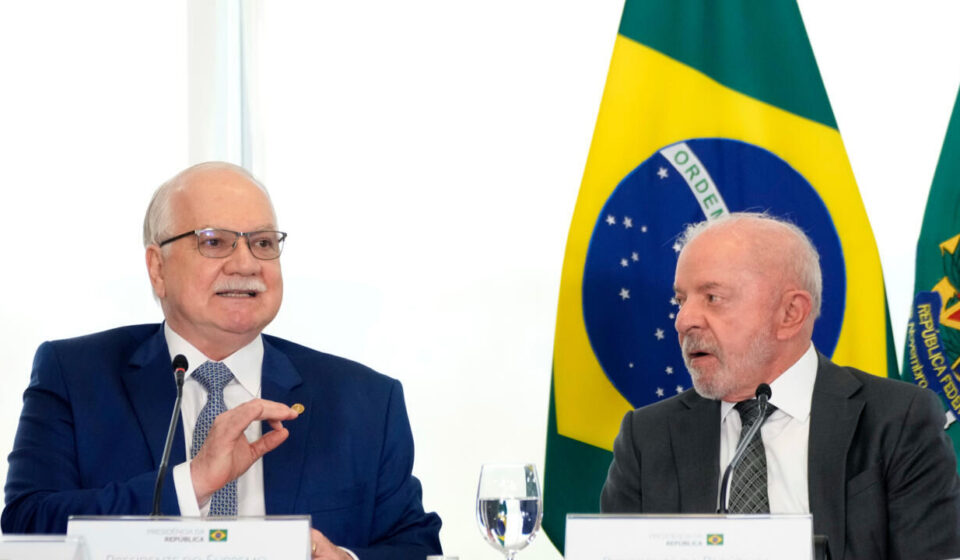
The court’s president Edson Fachin promptly waded into the dispute and suspended both rulings, according to a ruling seen by AFP.
Fachin gave Rodrigues 48 hours to provide information before deciding his fate.
The eruption in the court has overshadowed the run-up to next month’s presidential election, in which Bolsonaro’s senator son, Flavio Bolsonaro, is trying to unseat left-wing Lula.
Mendonca fired the opening salvo in the row by ordering the publication last week of text messages from banker Daniel Vorcaro to Moraes, asking for information about the case against him.
Moraes hit back, accusing Mendonca of abuse of power on the basis of confidential police intelligence reports, whereupon Mendonca suspended Rodrigues.
One of your browser extensions seems to be blocking the video player from loading. To watch this content, you may need to disable it on this site.

‘Selective leaks’
The texts from Vorcaro, whose private bank Banco Master collapsed last year in a multi-billion-dollar pool of debt, have become fodder in the presidential race.
Lula on Wednesday said «greater transparency» was needed in the case, as well as an end to «selective leaks that impact the electoral race.»
«It is urgent to fully lift the secrecy of the investigations into all those involved in the Master case, whoever they may be, no matter who it hurts. Brazil needs to know the truth,» he insisted on X.
Vorcaro had boasted of having «friends in all branches of government» before becoming embroiled in one of Brazil‘s biggest-ever financial scandals.
One of your browser extensions seems to be blocking the video player from loading. To watch this content, you may need to disable it on this site.

The Master case is a «toxic» affair, a Supreme Court source told AFP, adding that police suspect the banker «put money into various places in order to later collect favors.»
In the days leading up to his arrest in November, Vorcaro sent around 30 text messages to a phone number police say belonged to Moraes.
«Do you think I need to be out of the country as early as Monday?» he asked in one message, just before his arrest while boarding a private jet.
Flavio Bolsonaro has pounced on the texts to bash Moraes, a hate figure for the Brazilian and US right for having spearheaded the coup trial of his father.
One of your browser extensions seems to be blocking the video player from loading. To watch this content, you may need to disable it on this site.

A fraud-accused banker
Jair Bolsonaro, an ally of US President Donald Trump, is serving a 27-year jail sentence after being convicted of trying to cling to power after losing the 2022 election to Lula.
But Flavio Bolsonaro’s own links to Vorcaro have been questioned after it emerged that the banker transferred millions of dollars to an intermediary at the senator’s request.
The younger Bolsonaro said the money was intended for use towards a film about his father.
The scandal engulfing the Supreme Court has sown alarm in the Brazilian business community.
Some 3,000 business organisations released a manifesto on Wednesday, warning of an «extremely serious institutional crisis.»
«If the legitimacy (of the judges) is questioned, everything else becomes uncertain: legal certainty, trust in institutions, and even social peace,» they argued.
(FRANCE 24 with AFP)
Fuente:
Leer la noticia original