
Here are the 6 big things we’re watching in the stock market this week

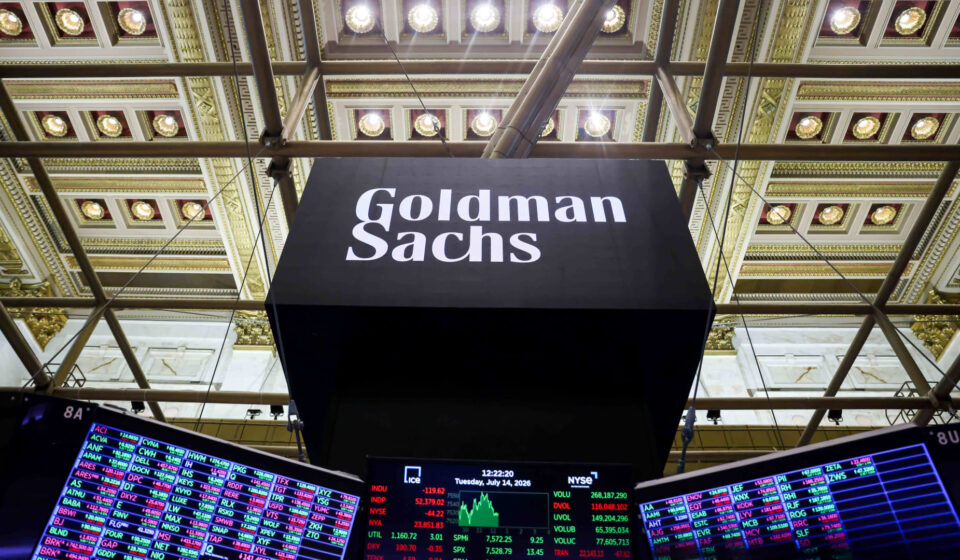
Earnings season ramps up this week, with four Club holdings set to report. Two main inflation reports are also out. We tend to place more emphasis on what management teams say during post-release conference calls than on monthly economic data, believing that companies’ quarterly report cards are the best way to get as close as possible to on-the-ground information. That commentary, particularly regarding forward guidance, helps us navigate the market as investors in individual stocks. However, in times like these, when elevated oil prices and higher bond yields are driving the bus, the latest economic releases also matter. Maybe not as much as earnings, but they certainly have the potential to sway expectations for what the Federal Reserve might do with interest rates at its two-day policy meeting later this month and move markets. 1. Consumer inflation : The main report to watch is Wednesday morning’s September consumer price index. Given the resiliency of the labor market, though there was a wobble in September nonfarm payrolls growth, Fed Chairman Kevin Warsh has made it abundantly clear that his focus is on the inflation side of the central bank’s dual mandate of maximizing employment and fostering price stability. According to the CME FedWatch tool, market odds that the Fed will hold rates steady in October, after its first rate increase in three years last month, are more than 80%. The market does still favor one more rate hike this year at the central bank’s December meeting. Economists polled by FactSet expect a year-over-year headline CPI increase of 3.6% — slightly hotter than August’s 3.4% gain. Excluding often volatile food and energy prices, the September core rate is expected to rise by 2.4% — the same increase as in August. The Fed’s inflation target, which has been elusive for years, is 2%. So, in-line readings are the least of what’s needed to keep rate hawks at bay (those who want the Fed to hike) and, more importantly, the bond market (which controls the important long end of the yield curve, like the 10-year and 30-year Treasuries). 2. Wholesale inflation : The producer price index, which arrives Thursday morning, doesn’t generally have the market-moving power of the CPI; the Fed is more concerned with what consumers pay. However, the PPI remains an important economic metric, measuring the price pressures companies face across their supply chains. Cost dynamics affect profit margins and can indicate where prices may be heading. Are costs coming down, leading to healthier margins and maybe some relief on selling prices, or are they going up, forcing companies to decide where to absorb margin compression or raise prices for consumers? Other data to watch include Tuesday’s existing home sales report. We wrote last week about a Melius upgrade of Home Depot and the tailwind it may see as the «lock in» effect diminishes and existing home sales pick up. We will be interested to see if the report contains any confirmatory information to help shares stabilize, while acknowledging that rates will need to come down for the stock to really get going. Retail sales are out Thursday, along with the PPI. Industrial production and capacity utilization are released Friday. 3. Goldman Sachs earnings: Quarterly results from the venerable investment bank kick things off Tuesday morning. Aside from Goldman’s headline numbers, we want to better learn how the high-rate environment has been impacting corporate funding — both in terms of the appetite for mergers and acquisitions as well as for private companies looking to go public. The stock market near all-time highs bode well for equity revenue, though the fixed income, currencies, and commodities (FICC) side is expected to be less of a growth driver. More broadly, analysts at Barclays said in their preview note last week, «Looking at the past 70 quarters of data, 2Q26 was the first time equities trading totaled more than FICC. We expect that trend to persist.» We’ll also be listening for any updates regarding succession planning. According to LSEG, the Street is looking for Goldman’s third-quarter earnings per share (EPS) of $13.02 and revenue of $16.74 billion. 4. Wells Fargo earnings : We’ll be looking to Wells Fargo for more insight into consumer banking and lending activities. While suspecting a message that the consumer remains healthy, we’re always interested to hear what the team is seeing across income groups. It is a big reason we believe all investors need to listen to money center bank earnings calls, even if they don’t own the names themselves. That’s arguably even truer this earnings season, ahead of the midterm elections. While we will let others debate how many people actually «vote with their wallet» in November, there is no denying that affordability is a key concern. High rates, however, can be something of a double-edged sword. On the one hand, they can raise the yields banks receive; on the other, competition for deposits can increase funding costs. How the team balances this dynamic, along with loan and deposit growth, will determine net interest margins and the latest outlook on net interest income (NII). Since last year’s lifting of the Fed asset cap, Wells Fargo has been growing its fee-based revenue streams. So, we’re interested to see how Wells’ investment banking is going. According to LSEG, the Street is looking for Wells EPS of $1.85 on revenue of $22.32 billion. 5. Bank of New York earnings : Wrapping it up for our financials is BNY , a position we added to last week. While Goldman is known for investment banking and Wells Fargo as one of the big banks serving Main Street, BNY is the world’s largest custodian bank. While fees should certainly benefit from rising asset prices, fee growth from market appreciation won’t carry as much weight with investors as fee growth from new business. In an earnings preview note, analysts at Seaport Global nudged up estimates on the view that net interest income (NII) stands to benefit from both deposit growth and higher rates. They also see BNY’s business servicing Trump Accounts as a tailwind for issuer services fees, while saying they have «greater conviction on organic growth momentum.» Trump Accounts are tax-advantaged investment and savings accounts for kids under 18. According to LSEG, the Street is looking for BNY earnings of $2.27 on revenue of $5.55 billion. 6. Johnson & Johnson earnings : J & J is the outlier among our stocks reporting this week, as the only non-bank. We don’t mind the counterprogramming. The stock has had an excellent year, though it’s pulled back more than 6% since its all-time closing high of just over $278 on Sept. 3, which coincided with a tough few weeks for most stocks outside the AI trade. Our main focus is on J & J’s Innovative Medicine pharma segment. In particular, we want to see whether Icotyde, its new oral psoriasis drug, has picked up momentum since its launch this spring. J & J has said this can be one of its best-selling drugs of all time. Given it’s still early in its lifecycle, we may not get an exact Icotyde revenue figure, so the relevant details will be things like patients initiated on the therapy, total prescriptions written, and the number of doctors prescribing the drug. Two other key growth drivers for the pharma business are Tremfya — used to treat psoriasis, ulcerative colitis, and Crohn’s disease — and blood cancer therapy Darzalex. Within J & J’s MedTech segment, we want to see whether its cardiovascular portfolio is getting back on track after some blemishes around Abiomed sales last quarter. We also hope to get updates on the rollout of surgical robot Ottava and the planned divestiture of its slower-growing orthopedics division, which private-equity giant Apollo has considered buying for roughly $20 billion, The Wall Street Journal reported last month . A final note: J & J has an investor day planned for Dec. 8, representing another catalyst for shares on the other side of earnings. According to LSEG, the Street is looking for J & J earnings of $2.53 on revenue of $25.25 billion. Week ahead Monday, Oct. 12 No major scheduled events Tuesday, Oct. 13 Before the bell: Goldman Sachs (GS) , Wells Fargo (WFC) , Johnson & Johnson (JNJ) , UnitedHealth Group (UNH), JPMorgan Chase (JPM), Domino’s Pizza (DPZ), Citigroup (C) 10:00 am ET: Existing Home Sales Wednesday, Oct. 14 Before the bell: ASML Holding (ASML), Bank of America (BAC), Morgan Stanley (MS), BlackRock (BLK), Progressive (PGR), Fastenal (FAST), State Street (STT) 8:30 am ET: Consumer Price Index Thursday, Oct. 15 Before the bell: Bank of New York (BNY) , Taiwan Semiconductor Manufacturing (TSM), Commercial Metals (CMC), Ericsson (ERIC), ManpowerGroup (MAN), Charles Schwab (SCHW), Marsh (MRSH), PNC Financial Services (PNC), Bank7 (BSVN), First Horizon (FHN), Nordea Bank (NRDBY), Prologis (PLD), U.S. Bancorp (USB) After the bell: Alcoa (AA), Interactive Brokers Group (IBKR), Independent Bank (INDB), J.B. Hunt Transport Services (JBHT) 8:30 am ET: Initial Jobless Claims 8:30 am ET: Producer Price Index Friday, Oct. 16 8:30 am ET: Retail Sales 9:15 am ET: Industrial Production & Capacity Utilization (Jim Cramer’s Charitable Trust is long JNJ, BNY, GS, and WFC. See here for a full list of the stocks.) As a subscriber to the CNBC Investing Club with Jim Cramer, you will receive a trade alert before Jim makes a trade. Jim waits 45 minutes after sending a trade alert before buying or selling a stock in his charitable trust’s portfolio. If Jim has talked about a stock on CNBC TV, he waits 72 hours after issuing the trade alert before executing the trade. THE ABOVE INVESTING CLUB INFORMATION IS SUBJECT TO OUR TERMS AND CONDITIONS AND PRIVACY POLICY , TOGETHER WITH OUR DISCLAIMER . NO FIDUCIARY OBLIGATION OR DUTY EXISTS, OR IS CREATED, BY VIRTUE OF YOUR RECEIPT OF ANY INFORMATION PROVIDED IN CONNECTION WITH THE INVESTING CLUB. NO SPECIFIC OUTCOME OR PROFIT IS GUARANTEED.
Fuente:
Leer la noticia original