
Here’s my power rankings for the big 4 hyperscalers after this earnings season

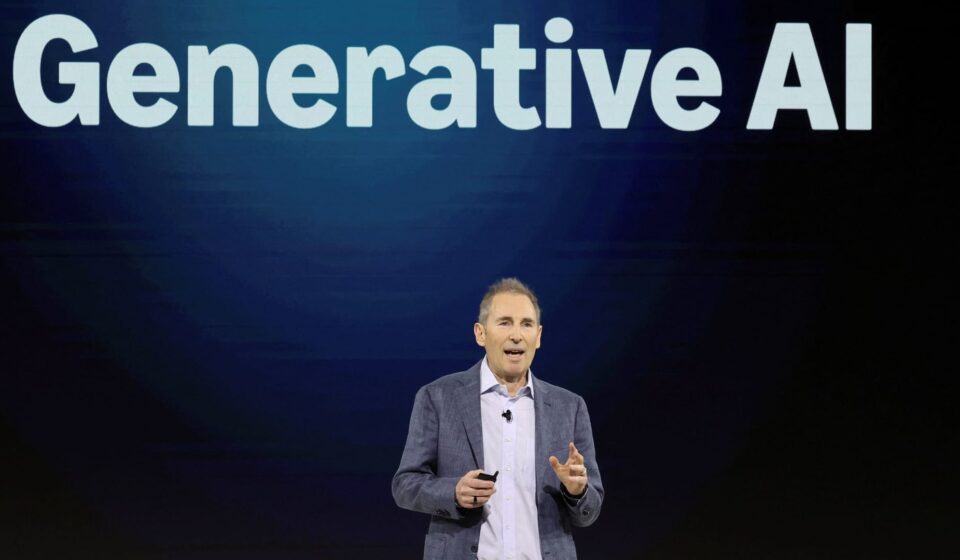
For months, I have been after Amazon CEO Andy Jassy to give us «line of sight» into something that can explain why they’re is spending so much money building out all of these data centers. I wanted to know if this is just some sort of rainbow without a pot of gold, or whether there really is a there there. It’s among our biggest positions in the Club portfolio, and I was getting pretty darned antsy that I was into a far more dicey situation than when we first bought the stock almost a decade ago. So, I kept hammering about the line-of-sight explanation. Somehow my musings got through to him. On Thursday’s earnings call — as I referenced in Friday’s Morning Meeting, and Jeff Marks talked about in his excellent Homestretch piece — Jassy gave us what I wanted. «At this level of spend and higher, we have clear line-of-sight to strong financial returns,» the CEO said. I want to spend more time unpacking what Jassy said because it has changed the minds of many about what seemed to be a ridiculous, if not ruinous, level of spending on artificial intelligence infrastructure. It was his calm, thought-out presentation that allowed Jassy to raise his 2026 capex budget by $20 billion to $220 billion and have his stock, in the wake of that announcement, gallop to its biggest one-day gain in over a decade. Shares surged 15.3% to $271.58 and added $382 billion in market cap. Contrast that to Google parent Alphabet , which on July 22 raised its capex guide by a similar amount — up $15 billion to a range of $195 billion to $205 billion. In response, the stock had its third-worst day in the past two years. Despite liking the company very much, I made clear in the aftermath that I was disappointed in Alphabet’s earnings call , particularly the discussion around balance-sheet health, despite liking the company very much. In a bit of irony, Jassy’s rigorous comments Thursday night took up all the hyperscalers’ stocks in Friday’s session. That includes Alphabet, which spiked 6.7% and has now erased all its post-earnings losses. Yes, Jassy’s words were that important. It didn’t hurt that Jassy had the goods: «Even at [$220 billion in capex], we will not have enough capacity to meet all the demand we have in 2026 and I believe this dynamic will also be true in 2027, too. In fact, the demand we already have for 2028 is striking. And remember, enterprises are still very early in using inference at scale in their current production applications. I heard the word «striking» all Friday. It was pitch-perfect. You want to argue with someone trying to meet «striking» demand? I don’t. Jassy also said that while he long believed Amazon Web Services could become «a few hundred billion dollar revenue business,» he now believes it will be at least double that and «very possibly be a $1 trillion-annual revenue business for us in time.» It’s worth repeating: He sees the potential for a trillion in revenues from this AI spending. If that’s the case, it makes sense that Jassy is willing to risk «free cash flow headwinds until these data centers come online, can be monetized and we get a few years into these servers being utilized.» Again, he forcefully explains the need to spend more even if it hurts — or wipes out — free cash flow, which is operating cash flow minus capex. Amazon had a cash outflow of $7.6 billion in the second quarter. Alphabet, on the other hand, almost seemed to not care about the change from being cash-flow dominant to cash-flow deficient. Yep, in the second quarter, Alphabet turn in a cash outflow of $5.86 billion — its first negative FCF quarter since going public in 2004. You have to remember that this is not the first time Jassy has had to spend more than Amazon took in initially. Before replacing founder Jeff Bezos as Amazon CEO in 2021, Jassy lead the creation of Amazon Web Services, which launched in 2006. The cloud unit has, of course, become Amazon’s most lucrative business. Getting AWS to cash flow positive longer than Jassy expects the mismatch to be resolved in this case. We sometimes forget how much Amazon had to juggle to get to its dominance. The company is not anxious to lose it. When you think of it like that, you know Jassy has to go out on a limb periodically to keep the crown. It was refreshing to hear a breakdown of where the spend goes, with Jassy explaining there are two major investments. The first is the construction of the data center building, and the second is the compute servers and networking equipment that go under the roof. In other words, the data center has to be built first. But nothing can be monetized until he can put the servers in. «Once a data center opens with servers plugged in, we start generating significant revenue right away and then get to monetize these data centers for 30-plus years without having to spend that start-up capital again.» It takes a little less than three years to break even on the investment in servers and networking gear, according to Jassy. That’s a small price to pay for a possible 30-year payoff. Of course, there are siting issues, community issues, power issues. They weren’t addressed in Jassy’s masterclass on AI capex. I will tell you, though, in the industry, Amazon is known as the shrewdest builder. Unlike those firms that are leasing compute capacity from neoclouds such as Iren , CoreWeave and Nebius , Amazon has total control. That will matter as the leases, I am told, can be murky as to who has control later on. When I met with Jassy in early May for a «Mad Money» interview, I wanted to know when, when, when. When would we see at least some money coming in from AI? He gave us a heck of an answer on Thursday night. «Our artificial intelligence run rate climbed significantly quarter over quarter and is now over $25 billion, growing triple digit percentages year over year,» he said. Line of sight? This money is in our faces. That, ladies and gentlemen, is why the stock of Amazon surged Friday and took its hyperscaler peers along for the ride. Jassy explained their rationale methodically, walking us through the lifecycle step by step. He made it clear he would be a fool not to spend the money because a data center is so lucrative. If Jassy can see it, so can the other major tech companies, hence the race among the companies that can monetize the data center: Alphabet, Microsoft , Meta Platforms and Elon Musk’s SpaceX , which jumped into the compute rental game this year. Let’s consider each one in light of their conference calls and Jassy’s insights. I have been tough on Alphabet because it nosedived after its tone-deaf call. That’s too bad because if you caught my July 23 interview with Google Cloud CEO Thomas Kurian, you can tell Google has really caught up after lagging badly before Kurian got there from Oracle eight years ago. If Alphabet had calmly explained why it had to boost spend and pointed out how much lift it is already seeing from AI, I think its stock could have embarked on a post-earnings rally because of the monster 82% revenue growth for Google Cloud. Granted, that’s off a smaller revenue base than AWS, which grew 37% in Q2. Nevertheless, Google Cloud’s growth is impressive. Alphabet’s call was irksome because they acted as if raising money from stock and bond sales was somehow good for the balance sheet. Hmmm. Bring back Ruth Porat, Alphabet’s current president and chief investment officer, for a CFO encore please. A descent into negative free cash flow is something that needs to be explained in a clinical, dispassionate way, not in a glib fashion. It obscured Kurian’s incredible work at Google Cloud. I reiterate the same numbers explained differently would have sent the stock higher. It’s only thanks to Jassy that those post-earnings losses were erased Friday. How about Microsoft? After reporting Wednesday night, Microsoft’s stock rallied magnificently on Thursday because it is not free cash flow negative despite all of its spend. I heard some chatter about how the numbers looked better because the company is extending the useful life of data centers to 25 years from 15, lowering depreciation expenses. I am not going to criticize CFO Amy Hood for her novel way of deciding how long a data center will last. The fact is Microsoft is now doing better on the front end, integrating its Copilot AI assistant to the mix. Getting over 30 million paid Copilot seats now counts toward Microsoft’s AI success. The business-to-business front porch helped Microsoft immensely. I was quite surprised at Copilot’s strength after being concerned that it was an also-ran like Microsoft’s search engine Bing. It took a little bit to get off the schneid, but it is certainly there now. Microsoft’s Azure cloud business, like Google Cloud and Amazon Web Services, is doing fantastically. Again, nice synergies. Spending forgiveness for a supposedly hated software company? Who would’ve guessed. It did get me wondering whether Microsoft’s stock was being kept down because Leopold Aschenbrenner’s Situational Awareness hedge fund had been shorting it. We know from my colleague David Faber’s reporting that the firm was shorting some software-as-a-service stocks — that is, before the forced liquidation of its levered bets . Microsoft’s stock is so huge it is hard to imagine that Aschenbrenner could drag it down. But anything’s possible with that boy wonder. Now to Meta, which reported Wednesday night alongside Microsoft. This spend explanation was the weakest. In fact, it was nonexistent. The company is participating in the huge data center buildout, but it has no cloud service business to help monetize the spend. Of course, there’s been reports that Meta was preparing to launch a compute-rental business — as I’ve urged the Instagram owner to do — and that possibility came up again on Wednesday’s call. But it seemed like CEO Mark Zuckerberg wasn’t sure whether Meta should use the compute it is building for itself or for others. I was quite shocked and disappointed that Meta didn’t seem to have a plan for all of this spend. I had come into the call expecting good things, including some projections of how they could more quickly recoup their costs than anyone. I didn’t get them. Instead I got a call that indicated there’s plenty of people using Instagram and Facebook and nothing’s changed. Really? Sometimes, Zuckerberg gets it wrong and then he pivots. I await the pivot. SpaceX holds its first earnings call since its blockbuster June IPO on Wednesday night. SpaceX has an enormous data center in Memphis, and Musk is renting it out for big money to Anthropic while he consolidates his business empire. He’s also renting compute to Google. SpaceX’s stock is soggy because there is just so darned much of it about to hit the market. The true believers don’t want to know what his plan is for his data center spend. They just want to know he’s involved. That’s why I am loath to criticize. What good does it do? The lovers will love, and the haters will hate. Bottom line I know that for months I was concerned that all of this spend was going to break the bank for some firms. I now feel that they are in a competitive situation and they can’t afford to lose. But it is not zero sum, as there is business for everyone that spends enough money, kind of like how there are three large cloud service companies: Amazon, Microsoft and Alphabet. That’s why I want to reiterate that I like Amazon the most, and then Microsoft because it turns out that its AI business is already doing very well. In third place now is Alphabet because I didn’t like how they didn’t seem to care about how much they were spending. Meta? Jeez. I had hoped to hear all about the forthcoming Meta cloud service. I am confident that had we gotten a clear plan, the stock would be in the high $600s, instead of the mid-$500s. Maybe next time? Now that the others are on firmer footing and respected again, we just have to wait to see whether Zuckerberg has heard the thunder. If these last two weeks proved one thing: unless you do have a data center business to monetize the AI work, you may not want to go down that path. But if you do, you can afford it. As Jassy explained, the returns should eventually be there. A fantastic company like Meta is not going to be able to afford the capex spend and make it up with sales of Ray-Ban smart glasses. They can make you look better, but not make you wealthier. In fact, in the case of Meta and its Reality Labs division , they lose you money. Finally, I want to make one more point, perhaps more than any other: the people who run these companies are very powerful and have unlimited resources. They are remarkable executives. I have been trying to get all of the hyperscalers to explain their spend. Only one, Andy Jassy, was courageous and smart enough to do it. That’s worth remembering if you ever doubt owning Amazon’s stock again. (Jim Cramer’s Charitable Trust is long AMZN, META, GOOGL and MSFT. See here for a full list of the stocks.) As a subscriber to the CNBC Investing Club with Jim Cramer, you will receive a trade alert before Jim makes a trade. Jim waits 45 minutes after sending a trade alert before buying or selling a stock in his charitable trust’s portfolio. If Jim has talked about a stock on CNBC TV, he waits 72 hours after issuing the trade alert before executing the trade. THE ABOVE INVESTING CLUB INFORMATION IS SUBJECT TO OUR TERMS AND CONDITIONS AND PRIVACY POLICY , TOGETHER WITH OUR DISCLAIMER . NO FIDUCIARY OBLIGATION OR DUTY EXISTS, OR IS CREATED, BY VIRTUE OF YOUR RECEIPT OF ANY INFORMATION PROVIDED IN CONNECTION WITH THE INVESTING CLUB. NO SPECIFIC OUTCOME OR PROFIT IS GUARANTEED.
Fuente:
Leer la noticia original