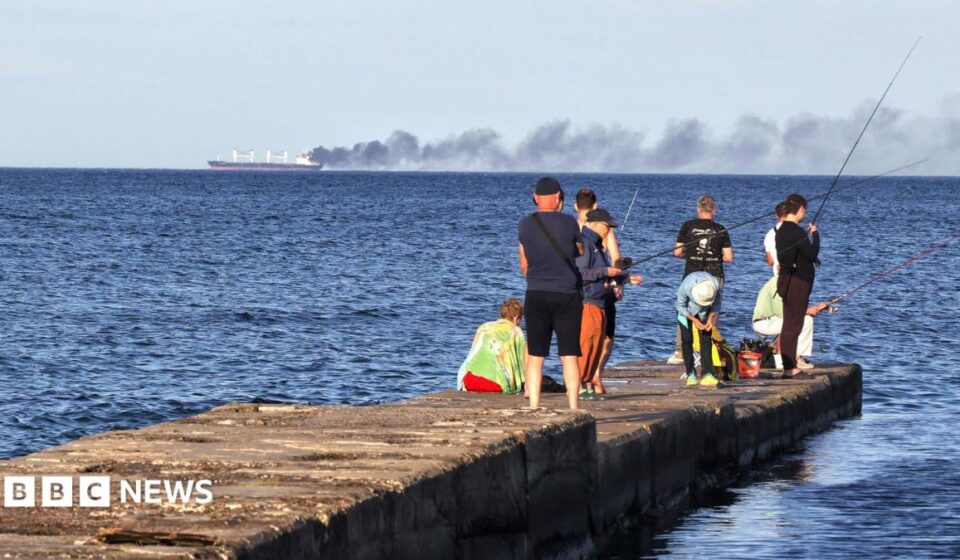

Stavnitser says Russia is almost certainly retaliating for Ukraine’s recent, highly successful attacks on Russian shipping, including sanctioned vessels carrying oil, as well as other ships involved in ferrying supplies to Russian-occupied Crimea.
Using its own drones, Ukraine’s Operation MoLoChKa (which roughly translates as «Moscow will fall through Crimea») has struck around 200 Russian vessels, bringing traffic in the strategic Sea of Azov to a virtual standstill.
Ukrainians bristle at the suggestion that Russia and Ukraine are playing the same game. Kyiv is attempting to loosen Moscow’s grip on occupied territory, they point out, while Russia is preventing Ukraine from exporting badly needed grain to the international market.
With Ukraine’s summer grain harvest well under way, this is all happening at the worst possible time.
«It’s the most sensitive period,» says Volodymyr Slavinskyi, trading director for Nibulon, one of the country’s leading grain exporters.
«Farmers need to quickly harvest grains from the fields, not to lose the crop. They need to be able to sell the crop they harvested and reinvest money in the next production cycle.»
The impact of a prolonged shutdown of Ukraine’s ports are likely to be severe. Ukraine is one of the world’s largest producers of grain and oilseeds, supplying around 6% of global wheat exports before Russia’s full-scale invasion and 10% of corn exports.
But reports suggest, external its export capacity has dropped by at least a third since Russia launched its full-scale invasion.
The Black Sea remains a vital export route for the country. Last year, the Greater Odesa ports accounted for more than 73 million tonnes of Ukraine’s maritime exports, with grain accounting for 38 million tonnes.
With almost no vessels currently moving on Ukraine’s Black Sea shipping corridor, traders are already counting the cost of this summer’s closure.
«I would say we’ve already lost the ability to deliver to global customers around half a million or 700,000 metric tons of Ukrainian grains and oilseeds,» Slavinskyi says.
Fuente:
Leer la noticia original