
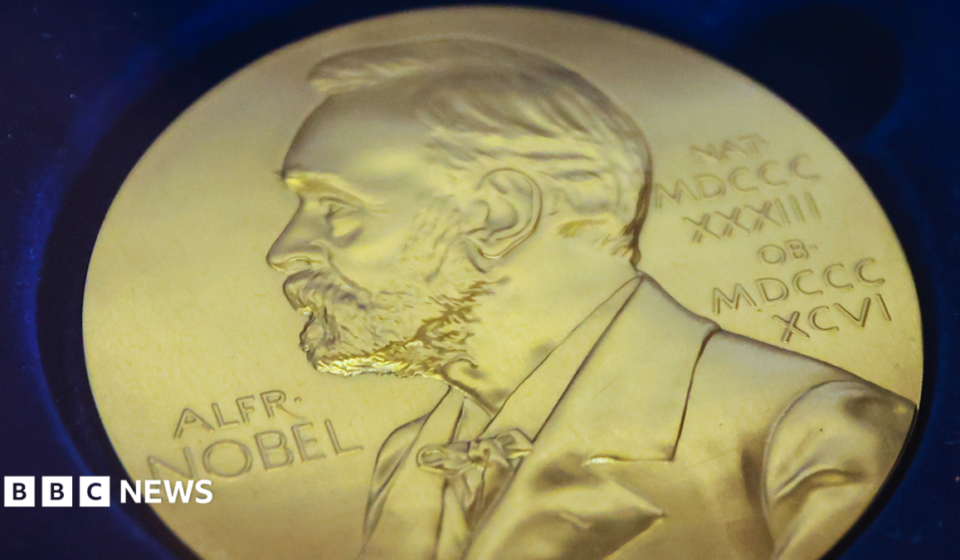

The Nobel Prize in Chemistry has been awarded to French scientist Henri B. Kagan and Japan’s Kenso Soai for providing a solution to the chemical mystery of life’s asymmetry.
The researchers discovered how nature exclusively makes the correct version of a molecule – rather than its mirror image.
For example, amino acid molecules, the building blocks of proteins, exist as two forms that are each other’s mirror image.
But living organisms on Earth only function with one of those forms. The Nobel laureates answered the question: why does life favour just one of these mirror image molecules over the other.
In organic chemistry, this property is known as «chirality», so chiral molecules have both right and left-handed forms.
You can think of them as looking like our hands – not identical, but each a mirror image of the other.
And while nature almost exclusively produces the version it requires to function, chemical reactions in a lab usually create a 50-50 mix of both left- and right-handed molecules.
When it comes to making drugs, this is particularly significant, because each version behaves differently when it interacts with our bodies.
So, one might have disease-fighting properties, while the other version does nothing or even causes harm.
The development of the Thalidomide drug is an example of this. In the 1950s it was prescribed to pregnant women suffering with morning sickness. But it is a chiral molecule – the right-handed version is an effective treatment, but the left-hand is toxic.
The original drug given was a mixture of the two, and it was later discovered that the body will convert between the two. The result was thousands of children, born to women who took the drug, developed severe disabilities.
Speaking to the Nobel Prize press conference this morning over the phone, Kenso Soai said: «This is one of the most exciting days of my life.»
Fuente:
Leer la noticia original