
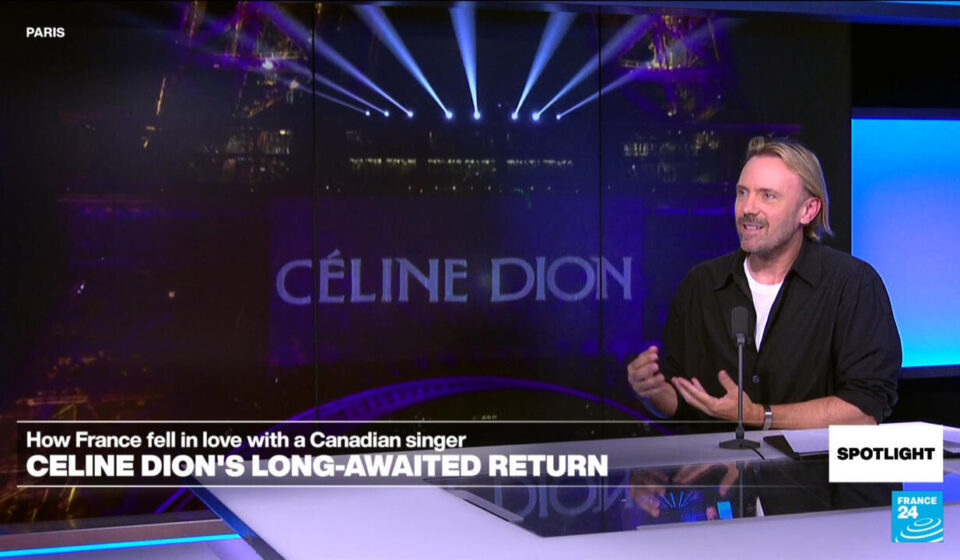


François Picard is pleased to welcome Nick Rees-Roberts, Professor of Media, Culture and Communication at the Sorbonne Nouvelle University, Paris. According to Roberts, Celine Dion’s extraordinary return to Paris reveals something larger than the enduring popularity of a global pop star. Her appeal lies in an unusual ability to bridge categories that contemporary celebrity and pop culture often keep separate: generations, languages, cultural hierarchies and even the apparent opposition between authenticity and carefully constructed stardom.
Dion’s longevity matters. Audiences have watched her evolve from a young Québécois Eurovision winner into a global superstar whose songs have become part of mass cultural memory. Yet Roberts argues that her continued relevance cannot be explained by the music alone. Her public persona – funny, eccentric and seemingly “unfiltered” – creates an impression of authenticity even as her appearances are embedded within highly sophisticated systems of fashion, branding and celebrity performance. The paradox is central to her appeal: audiences can recognize the machinery of stardom while still experiencing the person behind it as genuine.
Her Paris residency intensifies that dynamic. It transforms the traditional concert tour into a destination experience in which the audience travels to the star, combining fandom with tourism, fashion and the contemporary “experience economy.” At the same time, Dion’s return following her illness activates one of popular culture’s most powerful narratives: the comeback. Her performance at the 2024 Paris Olympics, her association with the Eiffel Tower and now her residency allow Paris itself to become part of that story.
Roberts also identifies a significant shift in Dion’s cultural status. Once dismissed by some critics through associations with sentimentality and kitsch, she has been progressively re-evaluated, with fashion playing an important role in transforming her from commercially successful singer into a figure of broader cultural legitimacy. What emerges is a particularly contemporary form of stardom: globally commercial yet apparently intimate, meticulously constructed yet experienced as authentic, nostalgic yet capable of attracting new generations.
Perhaps most importantly, Dion’s success demonstrates the continuing social power of popular culture. From destination concerts to thousands of people singing together at karaoke, fandom offers something beyond consumption: participation, belonging and collective memory. In Roberts’s analysis, the phenomenon surrounding Celine Dion is ultimately about why, in an increasingly mediated culture, people still want to gather together and feel part of something larger than themselves.
Fuente:
Leer la noticia original